Bewerbungskit
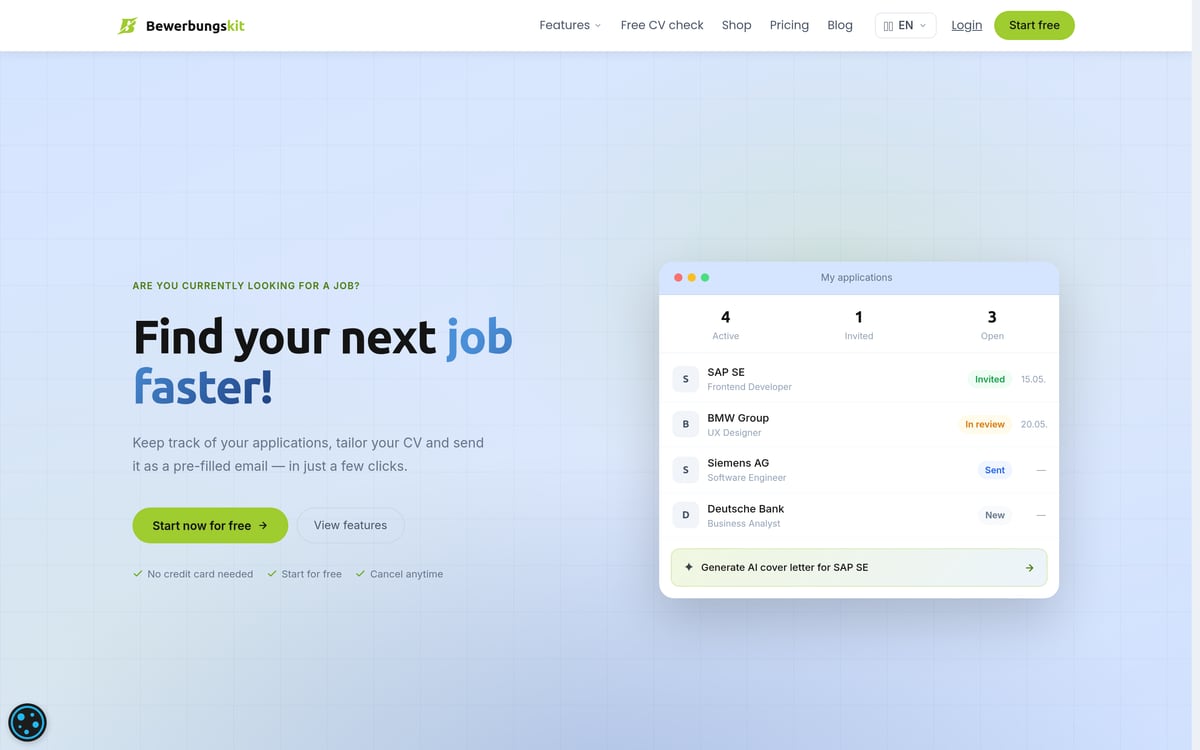
Bewerbungskit hilft Jobsuchenden, sich schneller zu bewerben — jede Bewerbung im Blick, der Lebenslauf pro Stelle angepasst und KI-Anschreiben in wenigen Klicks erstellt, plus eine Chrome-Erweiterung, die Stellenanzeigen direkt von den großen Jobbörsen übernimmt.
Bewerbungskit
Tech-Stack
SymfonyReactNext.jsPHPLLM / AIMySQLFirebase AuthStripeChrome ExtensionHAProxy
Auf einen Blick
Überblick
Bewerbungskit hilft Jobsuchenden, schneller den nächsten Job zu finden: jede Bewerbung an einem Ort, der Lebenslauf auf jede Stelle zugeschnitten und KI-Anschreiben, die in wenigen Klicks als vorbefüllte E-Mail verschickt werden. Eine begleitende Chrome-Erweiterung übernimmt Stellenanzeigen direkt von den großen Jobbörsen, sodass die gesamte Suche in einem Tool stattfindet.
Die Herausforderung
Bewerben ist repetitiv und zermürbend: Anschreiben immer wieder neu formulieren, den Lebenslauf anpassen und über ein Dutzend Jobbörsen hinweg den Überblick verlieren, wer geantwortet hat. Das Produkt musste diese Fleißarbeit beseitigen und aus einem zerfaserten Prozess eine geführte Pipeline machen — vom Entdecken einer Anzeige bis zum Versand einer maßgeschneiderten Bewerbung.
Ansatz & Lösung
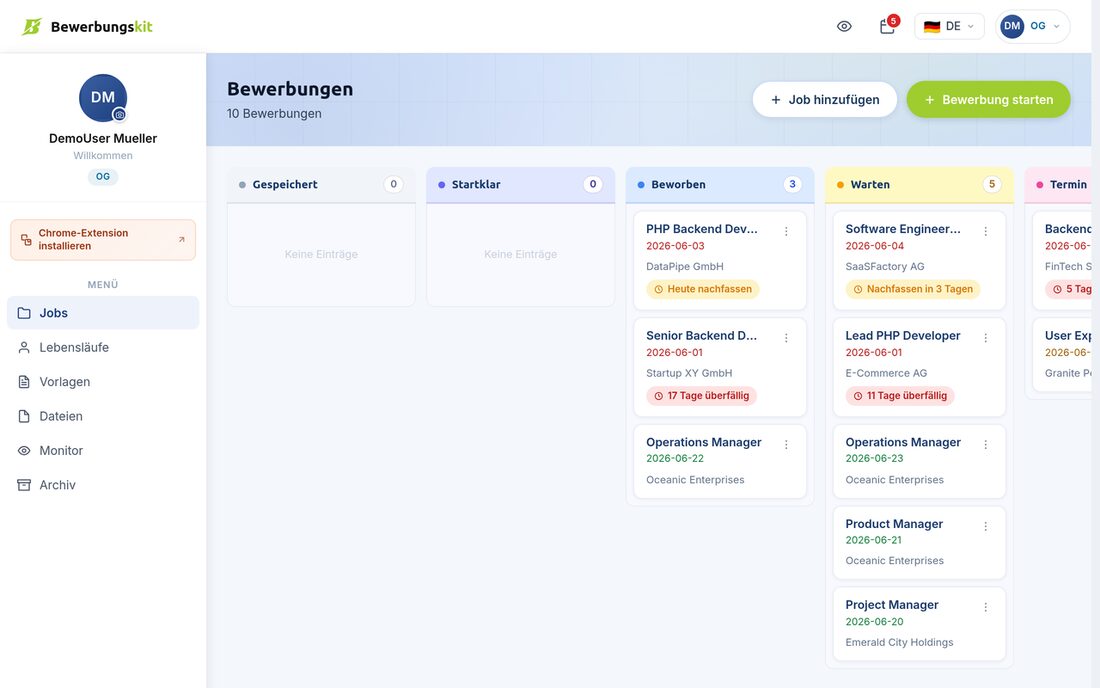
- Bewerbungstracker — ein Status-Board für jede Bewerbung, mit Erinnerungen zum Nachfassen.
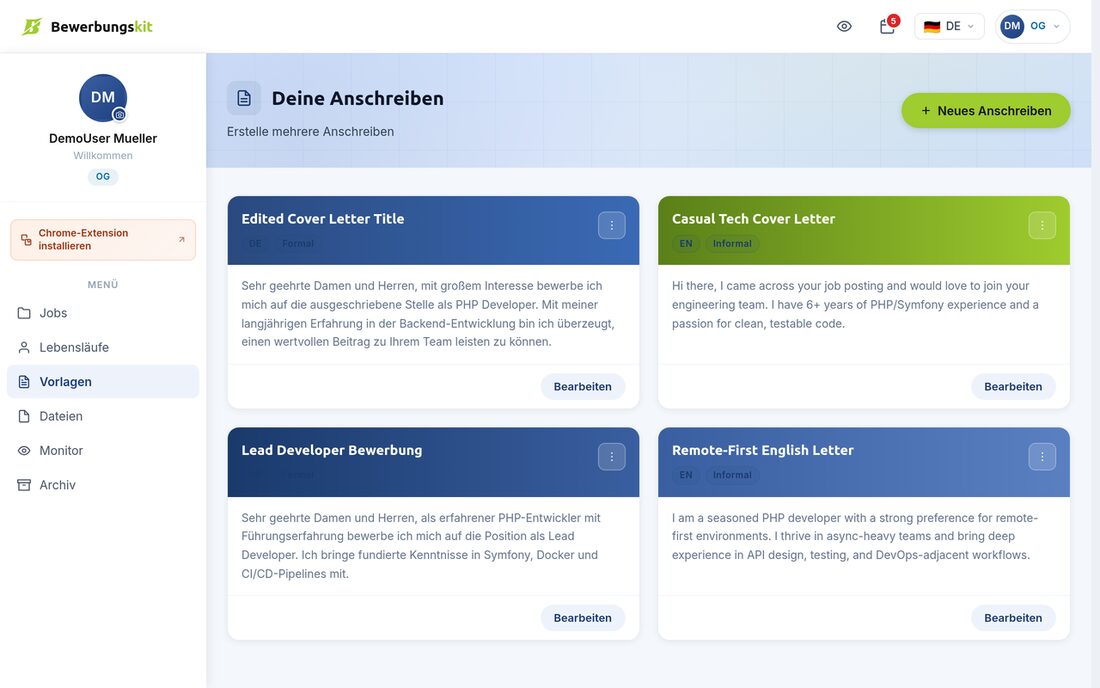
- KI-Anschreiben — maßgeschneiderte Anschreiben pro Stellenanzeige in Sekunden generieren.
- Lebenslauf-Anpassung & kostenloser Lebenslauf-Check — den Lebenslauf pro Stelle anpassen und sofort eine Einschätzung erhalten.
- Mehrere Profile — getrennte Profile für unterschiedliche Karriererichtungen pflegen.
- Versand mit einem Klick — die Bewerbung als vorbefüllte E-Mail verschicken.
Das Produkt ist in fokussierte Teile aufgeteilt: eine Symfony/PHP-REST-API, eine React-Single-Page-App für eingeloggte Nutzer und eine Next.js-Site, die die servergerenderten Marketing-Seiten ausliefert. Die LLM-Integration erzeugt Anschreiben und Lebensläufe, MySQL speichert die Daten, Firebase übernimmt die Authentifizierung und Stripe die Abos.
Die Chrome-Erweiterung
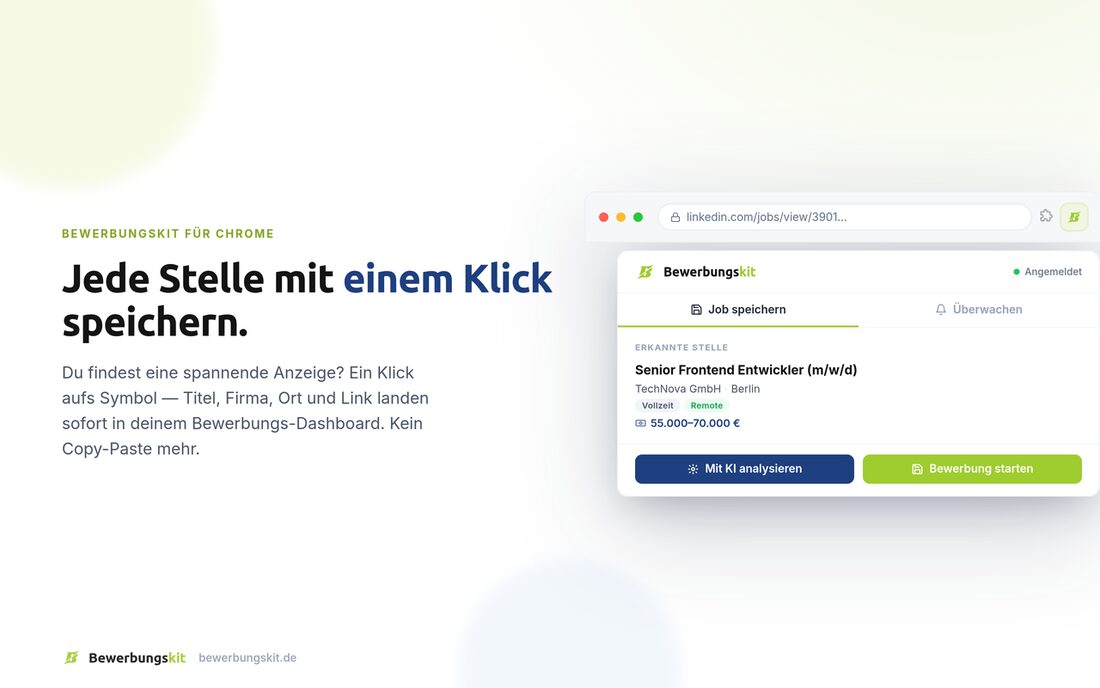
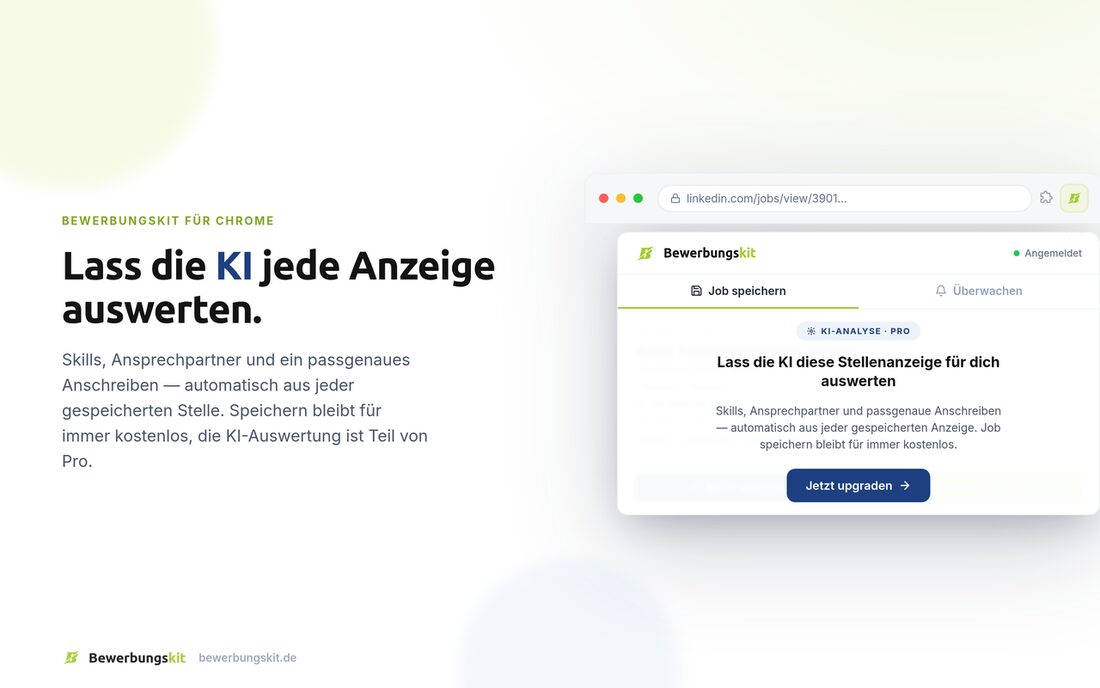
Der Großteil der Jobsuche findet auf den Jobbörsen selbst statt — deshalb bringt Bewerbungskit eine Chrome-Erweiterung mit, die Nutzer dort abholt, wo sie sind. Ein Klick speichert die Anzeige — Titel, Unternehmen, Ort und Link werden automatisch erfasst — von LinkedIn, XING, StepStone, Indeed und den übrigen, und reicht sie direkt an die KI zur Analyse weiter. Die Erweiterung ist im Chrome Web Store live und hat über 400 Nutzer.
SEO & Infrastruktur
Eine Single-Page-App für eingeloggte Nutzer und eine indexierbare Marketing-Site ziehen normalerweise in entgegengesetzte Richtungen. Ich habe das auf der Proxy-Ebene mit HAProxy gelöst: Die Startseite verzweigt anhand eines leichtgewichtigen Login-Cookies — Suchmaschinen und ausgeloggte Besucher erhalten die servergerenderte Next.js-Landingpage (vollständig crawlbar), eingeloggte Nutzer werden zur React-App geleitet — gleiche URL, zwei Zielgruppen. Statische Assets und die generierte sitemap.xml werden zum SSR-Backend geroutet, statt in die SPA durchzufallen, sodass Crawler echte Dateien statt der App-Shell bekommen. Das Ergebnis: ein Produkt, das für Nutzer eine schnelle SPA bleibt und trotzdem sauber für SEO indexierbar ist.
Soll ich Sie bei Ihrem Projekt unterstützen?
Sagen Sie mir, welches Ergebnis Sie brauchen — ich liefere Projekte end-to-end, mit KI jetzt noch schneller.